 : Linnanen 67, Hämeenlinna : Linnanen 67, Hämeenlinna |  : 2 h : 2 h |  : Hiking Boots : Hiking Boots |
January 2026 | Normally, we paint a picture of our adventures with words and photographs. This time, however, it might be more appropriate to start with a piece of classical music: Finlandia by Finland’s best-known and most respected composer, Jean Sibelius.
Even today, Finns are divided over whether Finlandia should be our national anthem. But enough of that debate. Why should you listen to it?
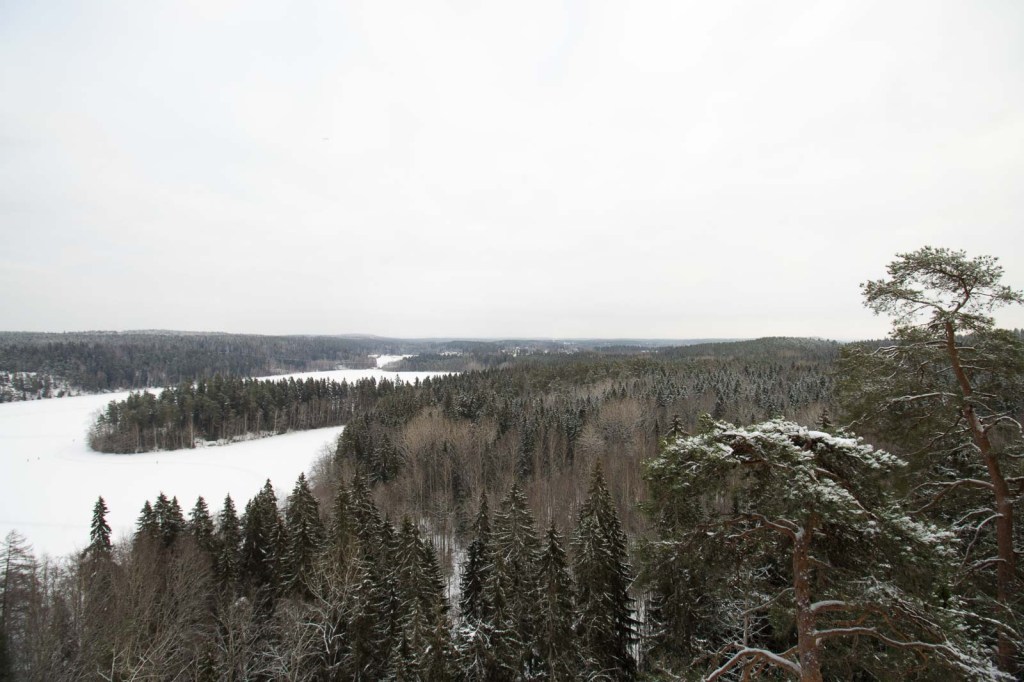
Sibelius is said to have been inspired by the views at Aulanko, and once you reach the observation tower, it’s not difficult to understand why. The view is almost exactly what Finns picture when they think of classic Finnish scenery: tall pines and spruces surrounding a lake, its surface glistening and reflecting the deep blue tones of the sky. Everything is quiet, and you suddenly feel very small compared with the scale of the landscape around you.
Parking & Facilities
Whether you arrive at Aulanko via the parking area linked at the beginning of this post or use one of the other car parks around the area, parking is free.
During both the summer and the skiing season, the car park we used has toilets. And I mean proper flushing toilets with running water. If you’ve visited enough Finnish nature sites, you’ll know this isn’t something to take for granted.
At the Linnainen 67 parking area, there are also changing rooms and a small café that is open occasionally. We couldn’t find any reliable opening hours for it, though, so I wouldn’t count on it being open when you arrive.
Route
There are many routes to follow in Aulanko, but in January we decided on a 5.5 km loop taking in some of Aulanko’s most iconic sights.
From the car park, we walked clockwise towards Ruusulaakson paviljonki and the main viewpoint. From there, the route continued to Metsälampi (Forest Pond), Joutsenlampi (Swan Pond), Aulangon Graniittilinna (Aulanko Granite Castle) and finally Onnentemppeli (Temple of Good Luck), before returning back to the car park.
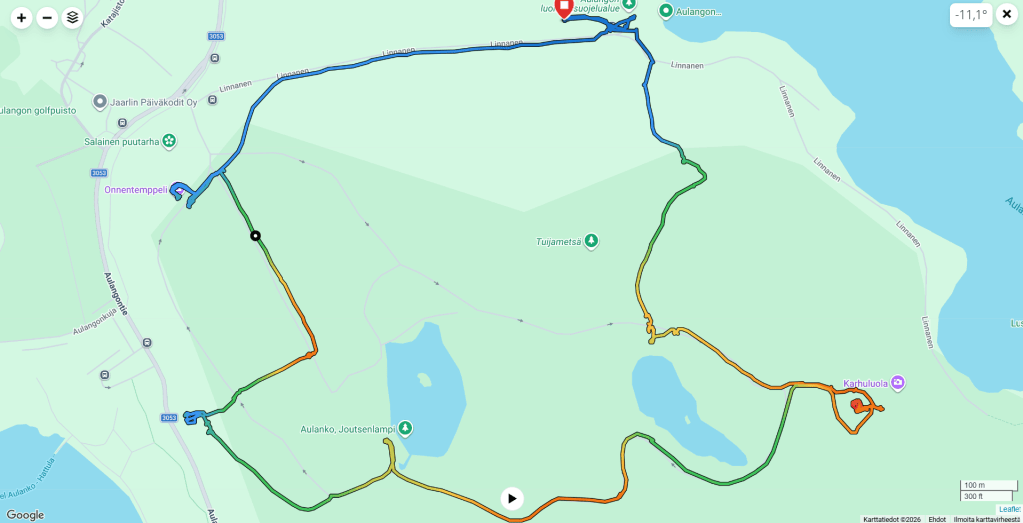
The paths themselves are easy to walk, with no particularly rocky or root-covered sections along the way. That said, there are a few surprisingly steep climbs along the way, including the ascent to the main viewpoint and the section between the Granite Castle and the Temple of Good Luck.
If you drive to the nearest car park instead of walking the full loop, the amount of climbing becomes much more manageable even for those with limited mobility.
For more detailed information about Aulanko’s routes and trail options, Luontoon.fi is a good place to start.
Scenic Drive
One thing that makes Aulanko unusual by Finnish standards is that parts of the area can also be explored by car. Scenic driving routes may be familiar from places such as Ireland, but they are far from typical at Finnish nature destinations.
Parts of Aulanko’s ring road are open to cars during certain periods, so with the right timing, this can be a useful option if walking longer distances is difficult or you’re travelling with small children. You won’t follow exactly the same route we did on foot, but you can still reach several of the area’s main sights and viewpoints.
Rose Pavilion
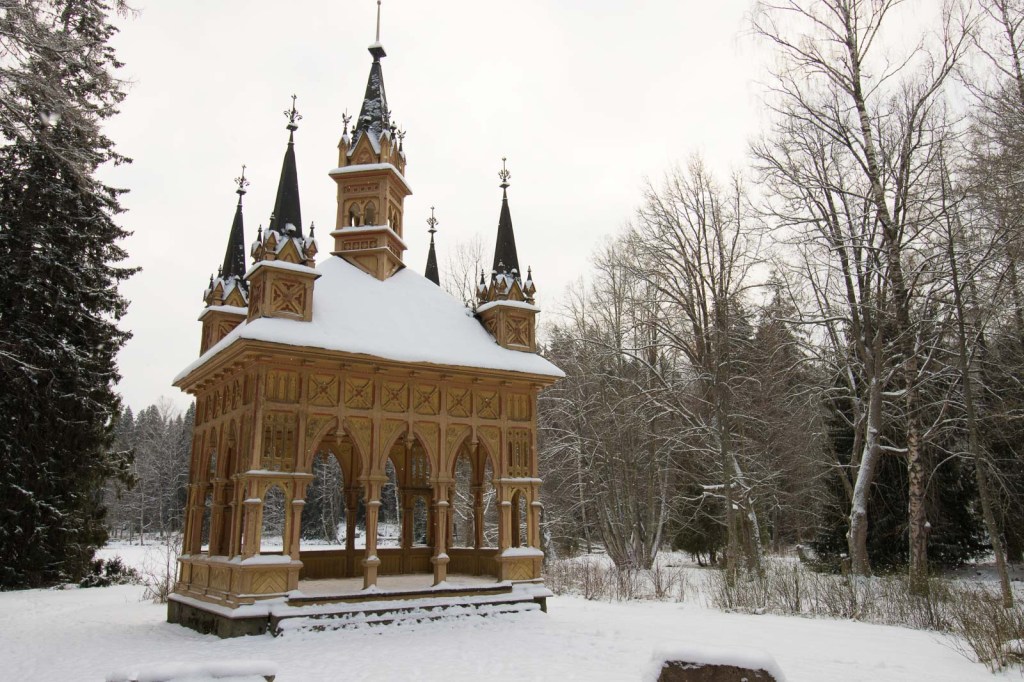
One moment you are walking through a rugged Finnish forest, and the next an ornate little pavilion suddenly appears between the trees. It is not exactly the kind of sight you would expect to encounter at the beginning of a nature trail.
Ruusulaakson paviljonki, the Rose Valley Pavilion, dates back to the 1890s. Hugo Standertskjöld had it built as part of the elaborate English-style landscape park he created at Aulanko. The neo-Gothic wooden pavilion once stood in an area planted with roses and other decorative vegetation, although apparently the roses themselves did not thrive there for very long.
The View
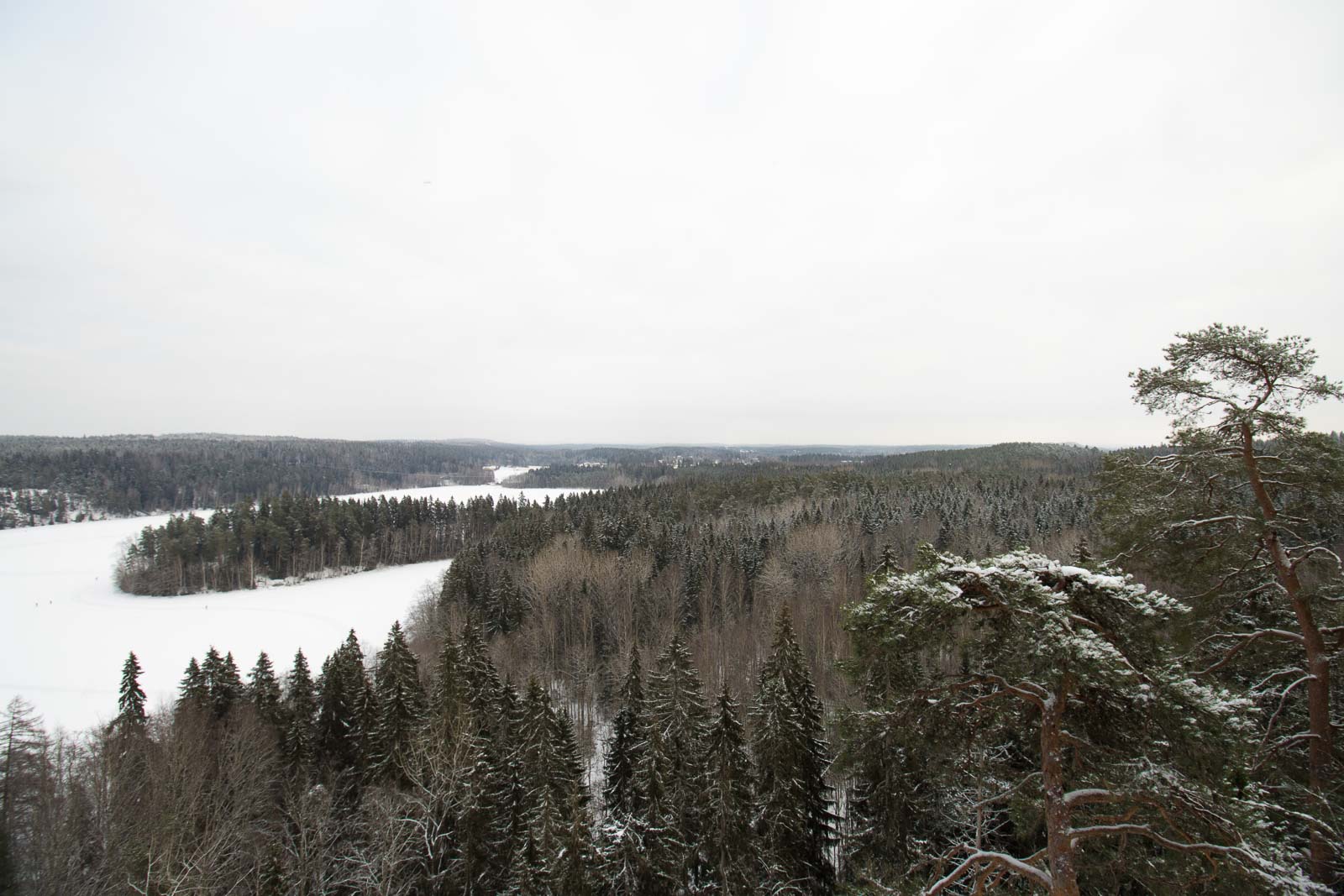
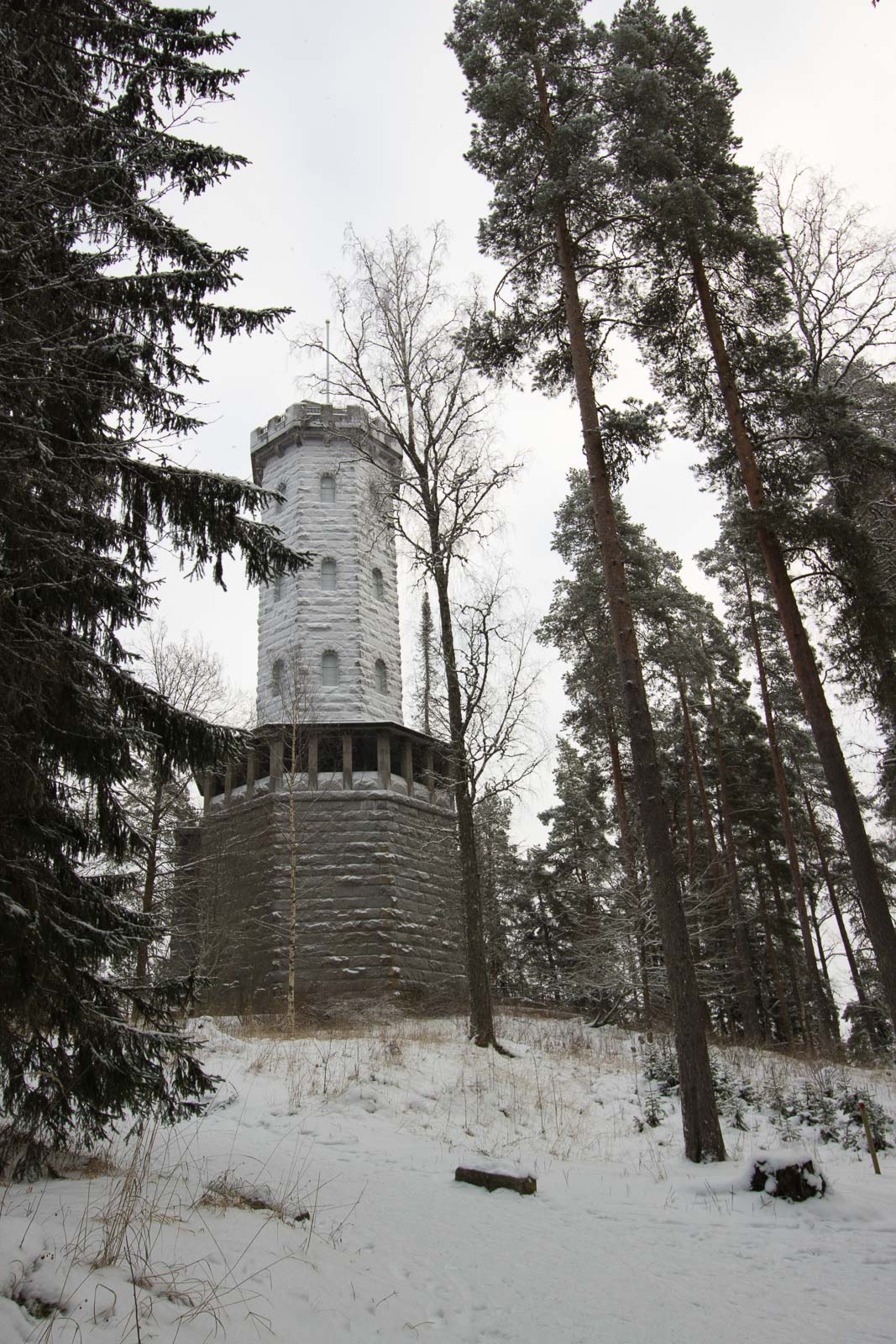
The observation tower has been part of Aulanko for well over a century. The 33-metre granite tower was built in 1906–1907 on Aulangonvuori Hill, replacing an earlier wooden lookout pavilion. From the top, the view opens over Lake Aulangonjärvi and the wider Vanajavesi valley, one of Finland’s national landscapes.
We visited in winter, when Lake Aulangonjärvi below was frozen and covered in snow. From the tower, the skiers and skaters looked like ants on their busiest highways. Tiny black dots moving across the white expanse of the frozen lake. Maybe next winter we’ll take skates with us and become dots ourselves.
There is another attraction just below the viewpoint. Stairs lead down from near the tower to Karhuluola, the Bear Cave, where a sculpture of a bear family has stood since 1905. The roads were already slippery enough during our visit, so we decided not to test our luck on the steep stairs leading downhill. The bears could wait until next time.
The Granite Castle
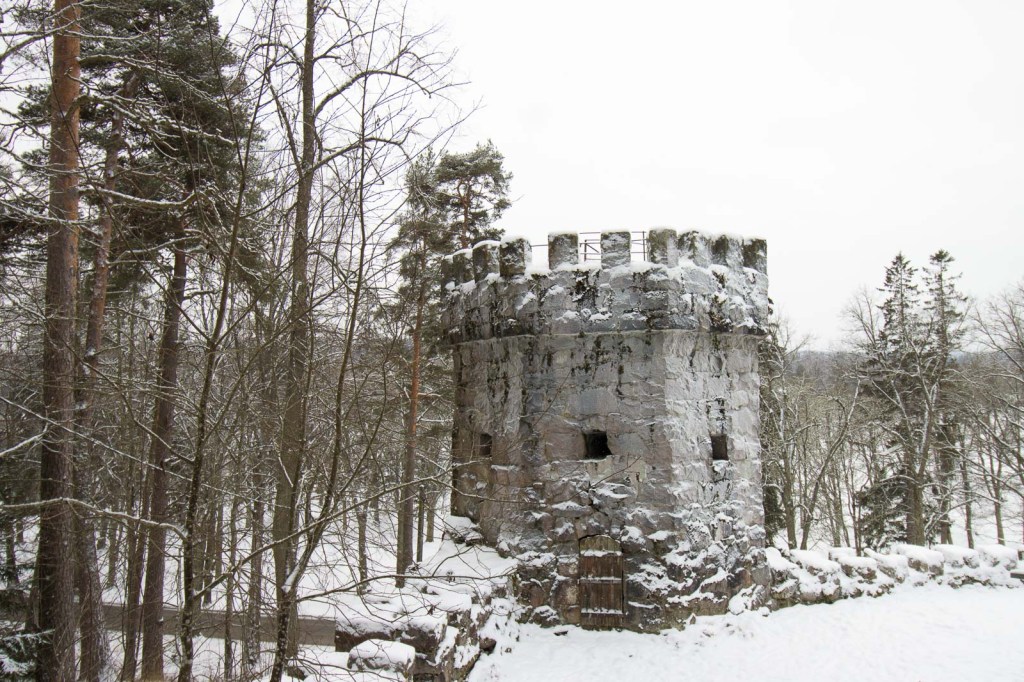
Aulangon Graniittilinna, the Granite Castle, is not actually the ruin of an old castle at all. It was built in 1887 as an artificial ruin, part of the same Standertskjöld vision that shaped much of Aulanko.
Today, though, the place feels less like a mysterious historic ruin and more like a slightly unusual summer theatre or playground. But that is not necessarily a bad thing. For us, it was a perfect excuse to feel like kids again as we climbed into the towers and squeezed through the little cave-like spaces to see what we might find.
So no, you are not exploring the remains of a medieval Finnish castle. But with a little imagination, it still makes for a surprisingly fun stop along the route.
Temple of Good Luck
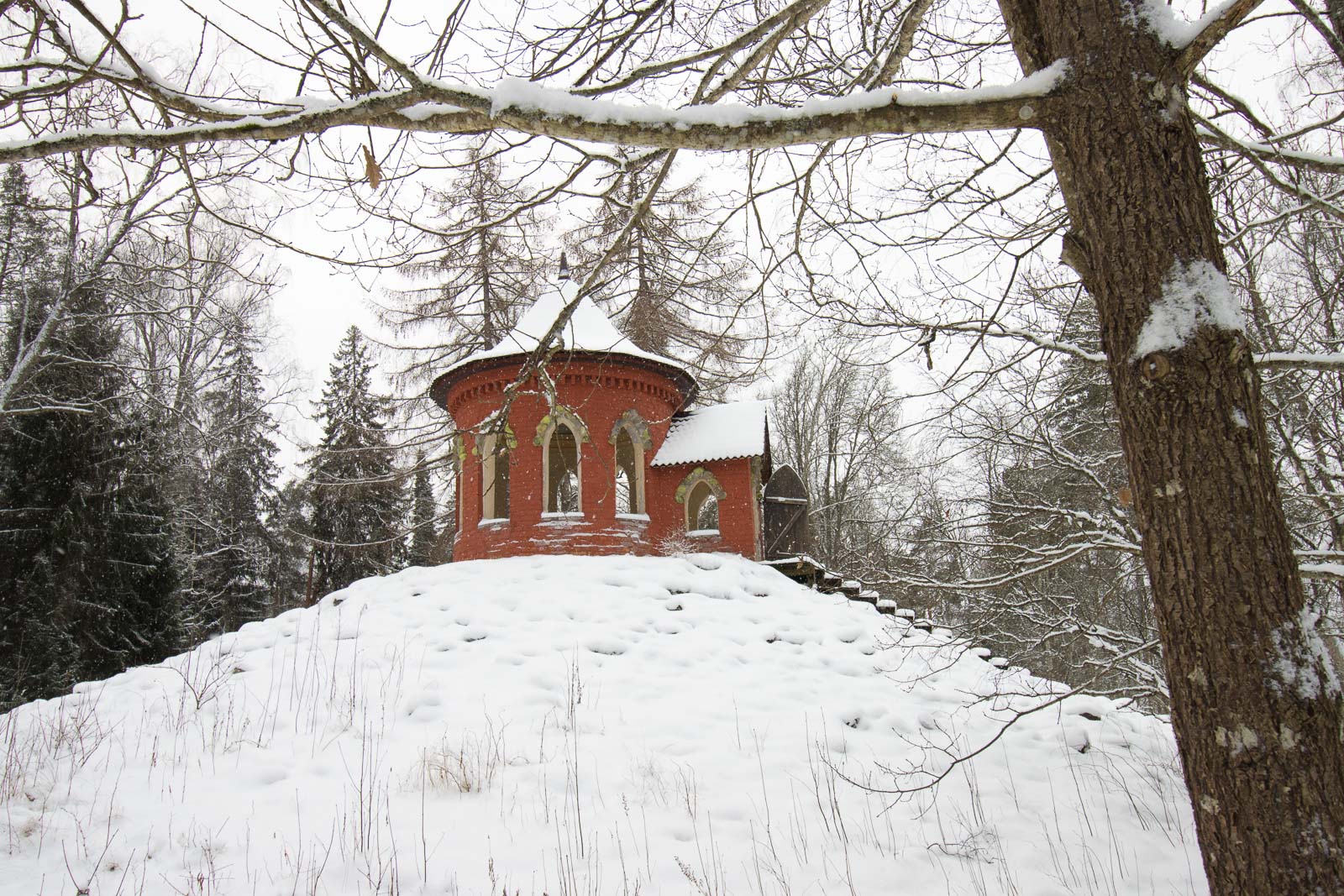
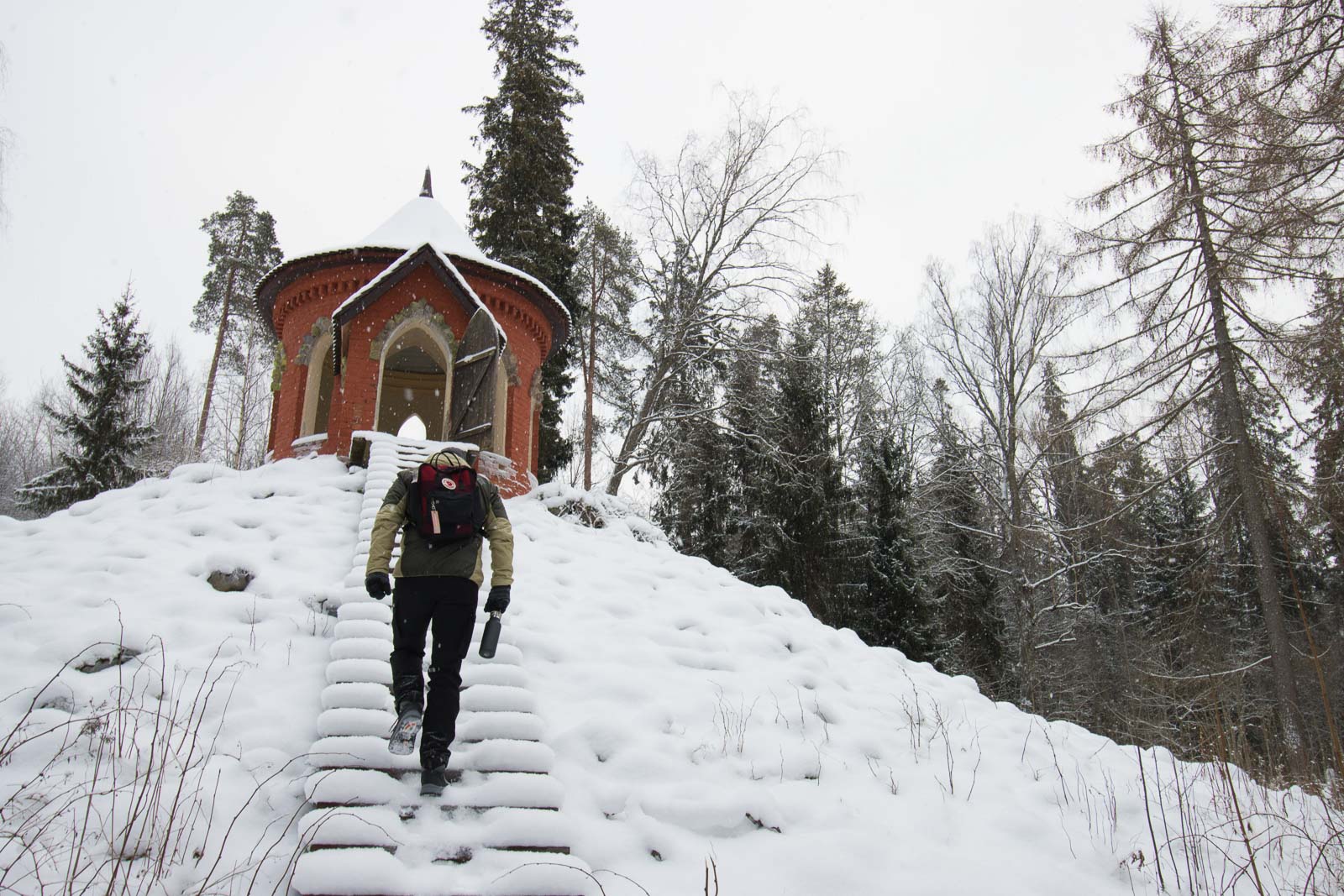
By this point in the route, we had already learned that Aulanko likes to hide rather unexpected things in its forests. Onnentemppeli, the Temple of Good Luck, is another one of them.
The small pavilion sits on top of a high stone mound and is another surviving piece of the landscape park created during the Standertskjöld era. After rose pavilions, artificial castle ruins and observation towers, perhaps finding a Temple of Good Luck in the middle of the forest should no longer have come as a surprise.
We couldn’t find any particular legend behind the name, but people clearly seem to have adopted the place for their own good-luck rituals. Inside, the walls are covered with little “I was here” messages, including notes from people who had visited during stag and hen parties and other special occasions.
It was a suitably peculiar final landmark before we headed back towards the car park.
Good to Know
- Parking around Aulanko is free.
- Parts of the area can also be explored by car.
- Proper flushing toilets available at the Linnainen parking area.
- Good footwear is worth having.
Something We Will Remember
For all the peculiar things Hugo Standertskjöld created at Aulanko, the part we will probably remember best is the most natural one: the view.
When you finally see where Finlandia may have found its grand, powerful tones and its lighter, soaring moments, it is hard not to fall a little bit in love with the landscape too.


Leave a comment